Play-based learning by year level: what changes from Foundation to Year 6
The quokid team
·
·
9 min read
In Foundation, your child spends a morning building a cubby out of blocks. By Year 5, they come home talking about a craft-stick bridge that held eleven blocks before it buckled. Somewhere in between, you might have wondered whether play quietly disappeared from school.
Usually it hasn’t. It has grown up. When people talk about play-based learning and the Australian Curriculum, they often picture the early years, but play keeps going right through primary school. It just looks very different in Year 6 than it does in Foundation, and the change happens gradually. Teachers step in more, the play gets more purposeful, and a lot of it moves into games, investigations and projects that don’t look much like a play corner.
The Australian Curriculum calls the first year of school Foundation, but every state and territory has its own name for it. It’s Reception in South Australia, Prep in Victoria, Queensland and Tasmania, Kindergarten in New South Wales and the ACT, Pre-primary in Western Australia and Transition in the Northern Territory. When this guide says Foundation, it means whichever of those your child is in.
It’s also worth knowing that New South Wales, Victoria and Western Australia teach from their own versions of the curriculum, built on the national one. The broad picture below holds across the country, but the detail can differ.
Play-based learning in one paragraph
Australia’s Early Years Learning Framework (the EYLF, now in Version 2.0) describes play-based learning as “a context and a process for learning through which children organise and make sense of their social worlds, as they engage actively with people, objects and representations.” It’s the national framework for children from birth to five years and through the transition to school. Researchers often describe a middle ground called guided play, where an adult sets up a learning goal and the materials, and the child still has plenty of say in how the play unfolds. That middle ground is the key to understanding what happens as children move up through primary school.
What the Australian Curriculum actually says about play
The Australian Curriculum sets out what students should be taught and the standards they’re working towards. It doesn’t hand teachers a single method. ACARA, the body that writes it, says states, territories, school sectors and schools decide how and when it’s delivered.
What the curriculum does do is describe the early years in language full of play. ACARA’s own parent information on what students learn says Foundation students “experiment, practise and play in the classroom and school community.” It also says they learn through “exploration and play” in Health and Physical Education, use “purposeful and creative play” in The Arts, and discover how technologies work through “exploration, design and guided play.”
Read the same page for Years 5 and 6 and talk of play mostly drops away, apart from fair play in sport. The learning hasn’t stopped being active or hands-on. It’s described in different words: investigations, design processes, simulations and performances.
So the honest answer to “does the curriculum require play-based learning?” is no, not as a rule. But it describes the first years of school in a way that leaves lots of room for play, and it describes the later years in a way that leaves room for playful, hands-on work.
How play changes from Foundation to Year 6
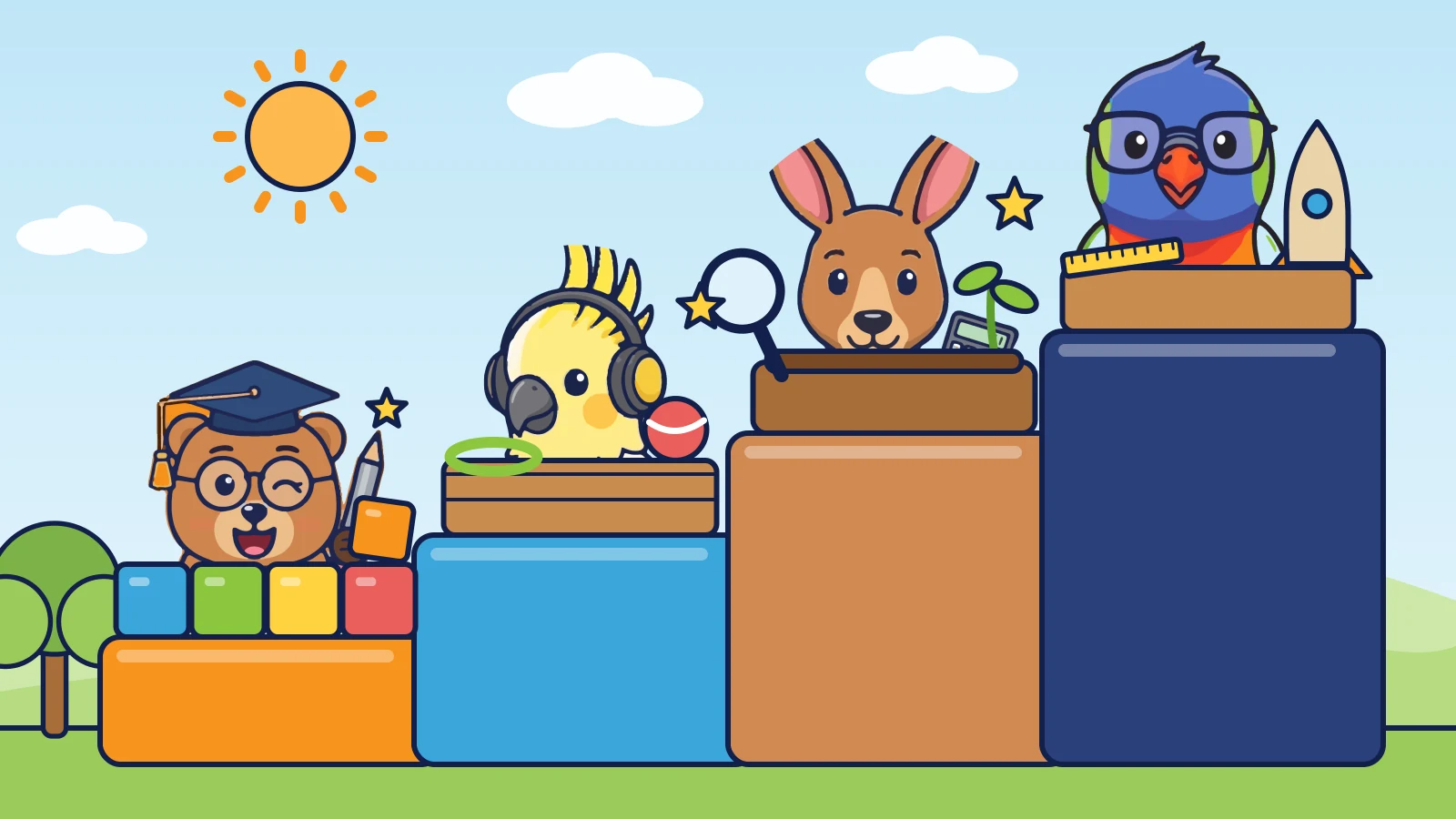
The Australian Curriculum doesn’t set a ratio of play to explicit teaching for any year level, so treat what follows as a general pattern, not a timetable. Across primary school, the adult’s role usually grows, the child-led part gets shorter and more targeted, and the play itself becomes more structured.
Stage
What play often looks like
What the curriculum describes (from ACARA’s parent information)
Foundation
Long stretches of child-led play with materials chosen on purpose, plus short explicit lessons
Students “experiment, practise and play”, with priority on literacy and numeracy
Years 1 and 2
Guided play with a clear goal, like measuring in the sandpit or acting out a story
Students use informal units to measure and “create fictional situations based on imagination” in Drama
Years 3 and 4
Games with rules, hands-on investigations and simple design tasks
Students “become more independent” and investigate “in a more systematic way” in Science
Years 5 and 6
Projects, design challenges, simulations and performances
Students “ask challenging questions and seek answers” and use design processes to produce solutions
Foundation
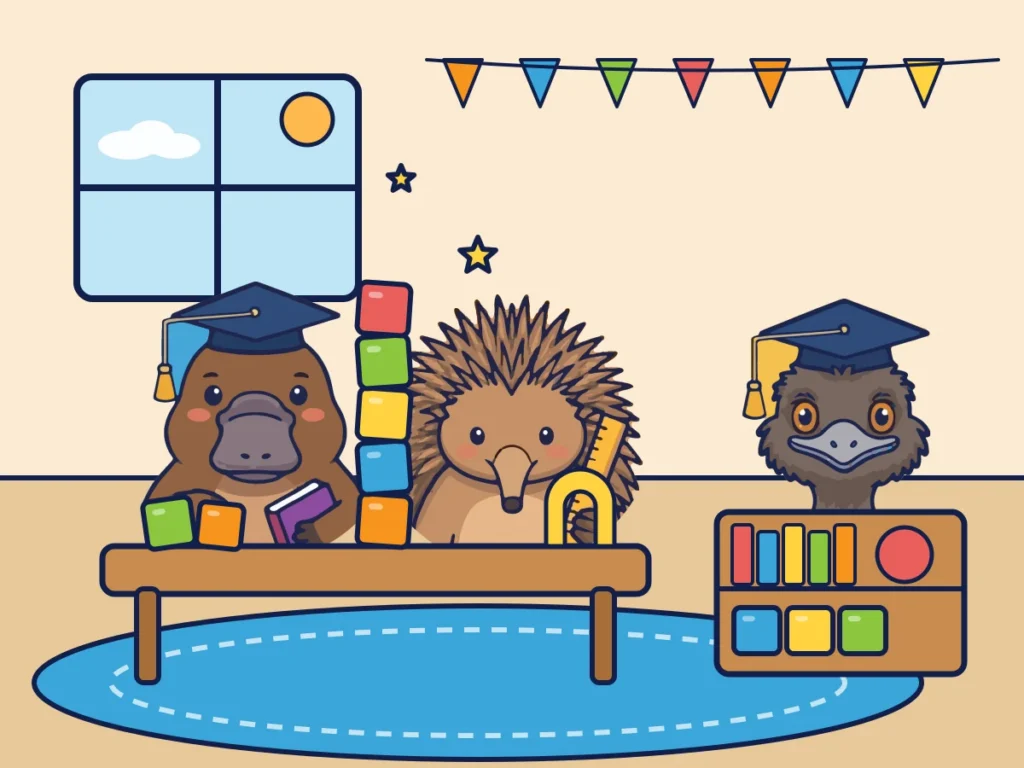
This is where play-based learning is easiest to spot. Expect blocks, dress-ups, sand, water, construction and pretend play, set up deliberately by a teacher who watches closely, joins in, adds words and nudges the play along without taking it over.
That doesn’t mean Foundation is all play. ACARA says priority is given to literacy and numeracy in the first year, so you’ll also see short, explicit lessons on letter sounds, counting and early writing. Often the two are linked. A child counting out cups for a pretend picnic is doing the same maths the curriculum describes as connecting numbers, their names and quantities up to 20.
Years 1 and 2
Play is still very much there, but the teacher tends to set the frame more often. The question, the materials and the goal come from the teacher, and children make real choices inside that frame.
The curriculum gives plenty of hooks for this. In maths, Year 1 and 2 students learn to use informal units to measure length, capacity and mass, which is exactly what happens when a class works out how many cups of sand fill a bucket. In Drama they create fictional situations based on imagination, and in Health and Physical Education ACARA still says they investigate “through exploration and play.”
This is also when some parents first worry that play has gone. Often it has simply moved into games and small investigations that look more like a lesson than a play corner.
Years 3 and 4
By now, children are expected to work more independently, and playful learning tends to come in shorter, more focused bursts. You’ll see games with rules, maths games with dice and spinners, hands-on science and early design work.
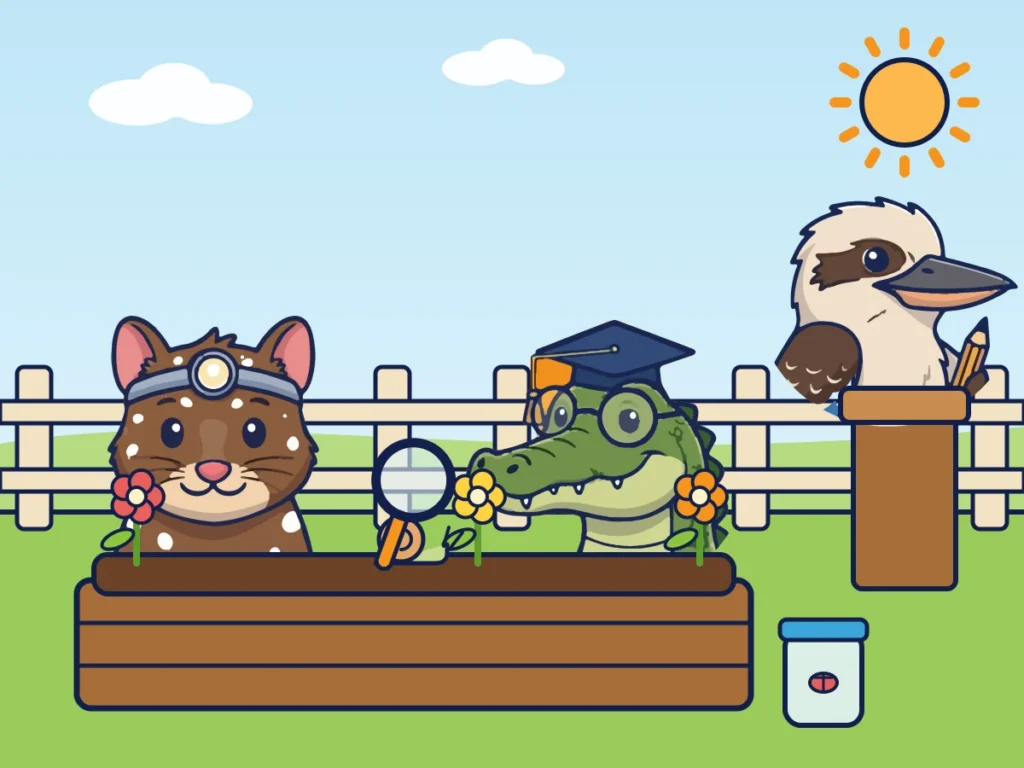
ACARA’s description gives some good examples. Year 3 and 4 students run repeated chance experiments in maths, which is a grown-up way of saying they roll dice and see what happens. In Science they learn about fair testing and investigate “in a more systematic way.” In Digital Technologies they create digital solutions such as simple interactive games. The play hasn’t vanished. It now has rules, a question to answer and a result to record.
Years 5 and 6
In upper primary, the term play-based learning comes up far less, and the work shifts towards research, extended writing and longer projects. Playful, hands-on learning still has a place, but it usually sits inside a design challenge, a simulation, a group project or a performance.
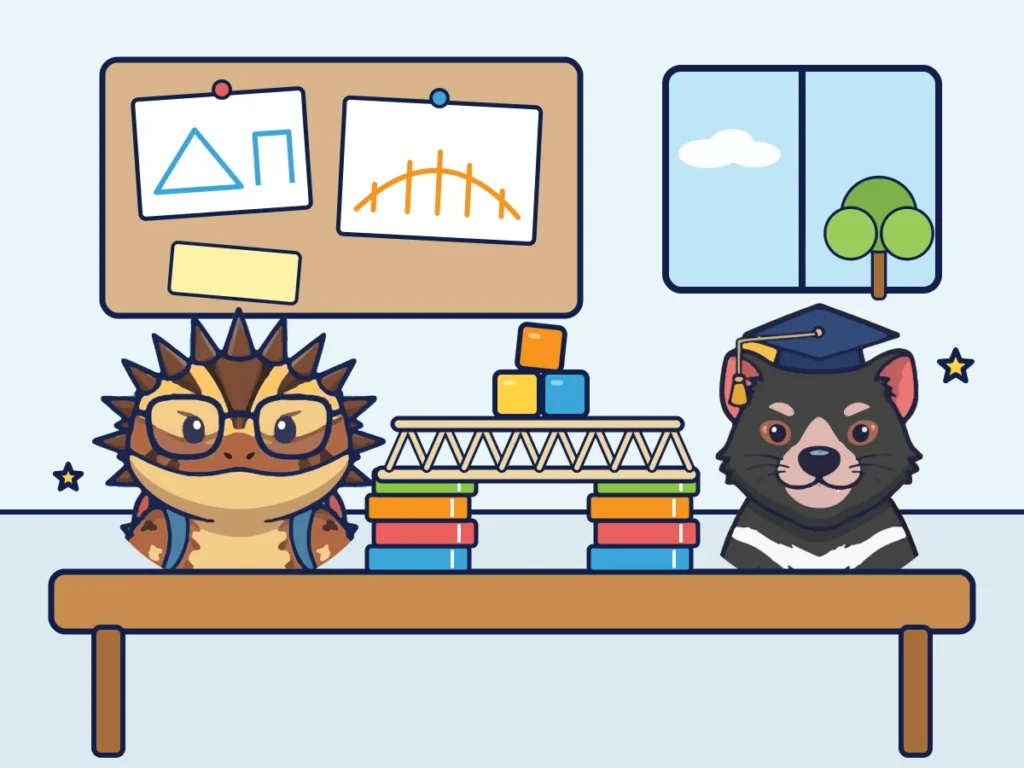
The curriculum points in that direction. Year 5 and 6 students recognise the role of variables in science investigations, run chance experiments and simulations using digital tools in maths, use design processes to produce solutions in Technologies, and rehearse and perform plays in Drama. A bridge-building challenge where a group tests how much weight their design can hold ticks several of those boxes at once, and it still feels a lot like play.
What stays the same at every year level
Your child is an active learner, doing and testing things, not just listening.
The teacher has a deliberate role: setting things up, watching, asking questions, explaining and stepping in.
Learning to get along, take turns, lose a game and try again counts as real learning.
Talking, reading, writing and number work are woven through the activity rather than kept separate.
The approach should suit the age of the children, which is exactly why it changes shape as they grow.
Signs that play has grown up, not disappeared
If you’re wondering whether your child’s class still learns through play, look for these in what they tell you about school:
Games with rules, including maths games, card games and dice games.
Investigations with a question to answer, like which ball bounces highest.
Design and build tasks, from paper planes to model bridges.
Role-play, drama and performance.
Group projects where children make real decisions about how to do the work.
If you can’t tell, ask the teacher how play and inquiry are used in the class this year, and how that compares with last year.
How to back it up at home, stage by stage
Home doesn’t need to look like school, and none of this needs special equipment.
Foundation and Year 1: keep open-ended things within reach, like boxes, blocks, pegs, playdough and water. Let your child run the game, then join in as the grown-up who asks questions and adds words. Count, sort and read aloud as part of everyday play.
Years 1 and 2: give play a light goal. How many cups fill the bath jug? Can you build a tower taller than the chair? Cooking and simple kitchen experiments are great for measuring.
Years 3 and 4: bring out games with rules. Board games, card games and dice games build turn-taking and number sense, and keeping score is real maths.
Years 5 and 6: try small design challenges and projects. Build the tallest paper tower, plan a pretend party on a budget, or film a short stop-motion story. Let them plan, test, fail and try again.
Where short daily practice fits
Play builds the reasons to use a skill. Practice builds the fluency that makes using it easy. Most children need some of both, and a little practice most days tends to stick better than a long session once a week.
That’s the gap QuoKid is built for. It’s a few minutes of practice for children aged 5 to 11, in maths, science, phonics, and spelling and grammar. A fresh set of activities is ready each morning, matched to your child’s age and the topics you switch on, from counting and letter sounds for younger children to fractions later on, with times tables in the mix. Correct answers earn stars, streaks reward showing up, and grown-ups can turn those into a real reward at home, like an extra bedtime story. There are no ads, no chat and no public leaderboards, and a simple progress view shows grown-ups what’s sticking and what’s still tricky.
The Free plan covers one child. The Family plan is US$4.99 a month or US$49.99 a year, with a 7-day trial, and adds up to five children with questions written around each child’s own results. It’s practice, not a replacement for play. A few minutes on QuoKid, then off to build something, is a pretty good balance. You can try it in your browser at learn.quokid.com.
FAQ
Does the Australian Curriculum require play-based learning?
Not as a rule. The Australian Curriculum sets out what students should learn and the standards to aim for, and states, territories, school sectors and schools decide how it’s delivered. That said, ACARA’s descriptions of the Foundation year are full of play, exploration and experimentation, and the national Early Years Learning Framework puts play-based learning at the centre of the years before school and the move into school.
Is play-based learning still used after Year 2?
Yes, though it usually looks different. From Year 3 onwards, playful learning tends to show up as games with rules, investigations, design challenges, simulations and performances. Teachers guide it more closely as expectations rise, which is often why it gets harder to spot from the outside.
What is Foundation called in my state?
It’s Reception in South Australia, Prep in Victoria, Queensland and Tasmania, Kindergarten in New South Wales and the ACT, Pre-primary in Western Australia and Transition in the Northern Territory. They all refer to the first full-time year of school.
Why doesn’t my child’s Year 5 class seem to play anymore?
Upper primary leans more on research, extended writing and longer projects, so open-ended play is less common. Hands-on, playful work usually continues inside projects and challenges. If you’re unsure, ask the teacher where students get to test ideas, build things or work in groups this year.
How do I find out what my child’s school is doing?
Ask your child’s teacher how play and inquiry are used in their class and how that balance changes across the year. For the official detail, ACARA’s parent information pages summarise each stage, and your state or territory education department can tell you which version of the curriculum your school follows.
Practise this with quokid
Daily activities matched to your child's level. Free for one child.