Play-based learning and the Australian Curriculum: a parent guide
The quokid team
·
·
7 min read
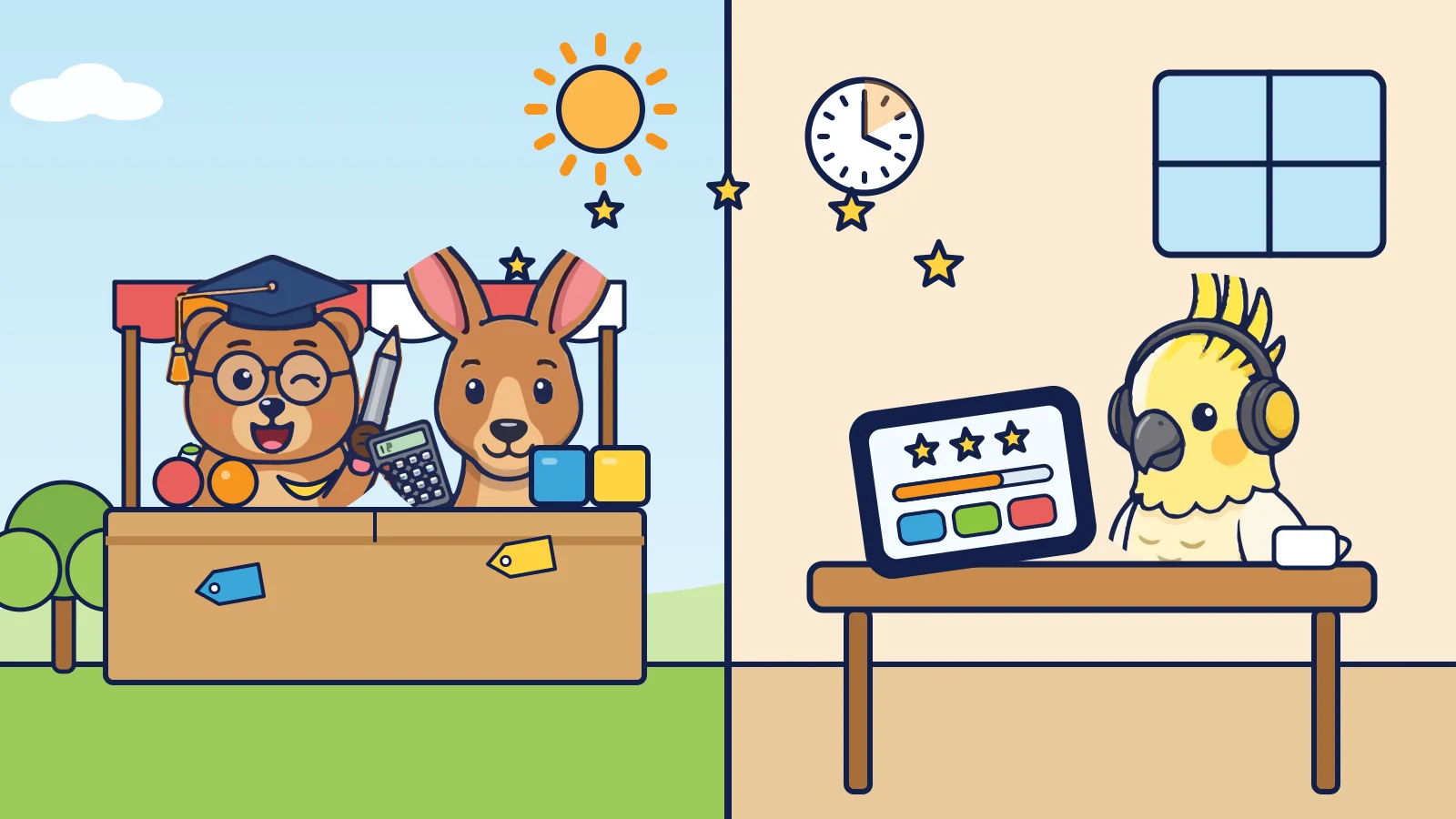
Your child starts school and comes home talking about the shop they built out of cardboard boxes, the cubby that kept falling down, and the argument about who got to be the vet. You nod along, then quietly wonder whether any of that counts as learning.
It does, and it isn’t separate from the Australian Curriculum. Play-based learning and the curriculum are two different things that work together: one describes what children need to learn, the other describes how teachers help them get there. Once you understand the split, the sand tray and the sight words stop looking like competing ideas.
What play-based learning actually means
Play-based learning is a way of teaching where children build skills, knowledge and understanding through play. That definition matters because it puts the learning inside the play, rather than bolting it on afterwards.
It’s also not the same as leaving children to their own devices. In child-directed play, the children decide and run the game, while the educator acts as a facilitator. The teacher is still watching, still planning, still deciding what to add and when to step in, but the child holds the reins on what the game is and how it unfolds.
Learning how to play is a skill in itself. Sharing a set of blocks, agreeing on the rules of a pretend bakery, coping when the tower collapses: these are learned behaviours, and they take practice.
A play-based approach also tends to mix several areas of development at once, rather than separating them into tidy boxes. Social and emotional skills, thinking, physical skills and language can all show up in the same ten minutes of a well set-up classroom.
How play fits with the Australian Curriculum
The simplest way to hold the two ideas together is to think of the curriculum as the destination and play as one of the routes. The Australian Curriculum sets out what students are expected to learn and the standards they’re working towards. Play-based learning is a teaching approach, not a competing syllabus. It shapes how learning experiences are designed, sequenced and guided.
Teachers still plan lessons and learning experiences, and children still get the independence to steer their own learning. Both halves are doing work. A teacher who plans carefully but never follows a child’s lead misses the point. So does a teacher who follows every whim with no plan behind it.
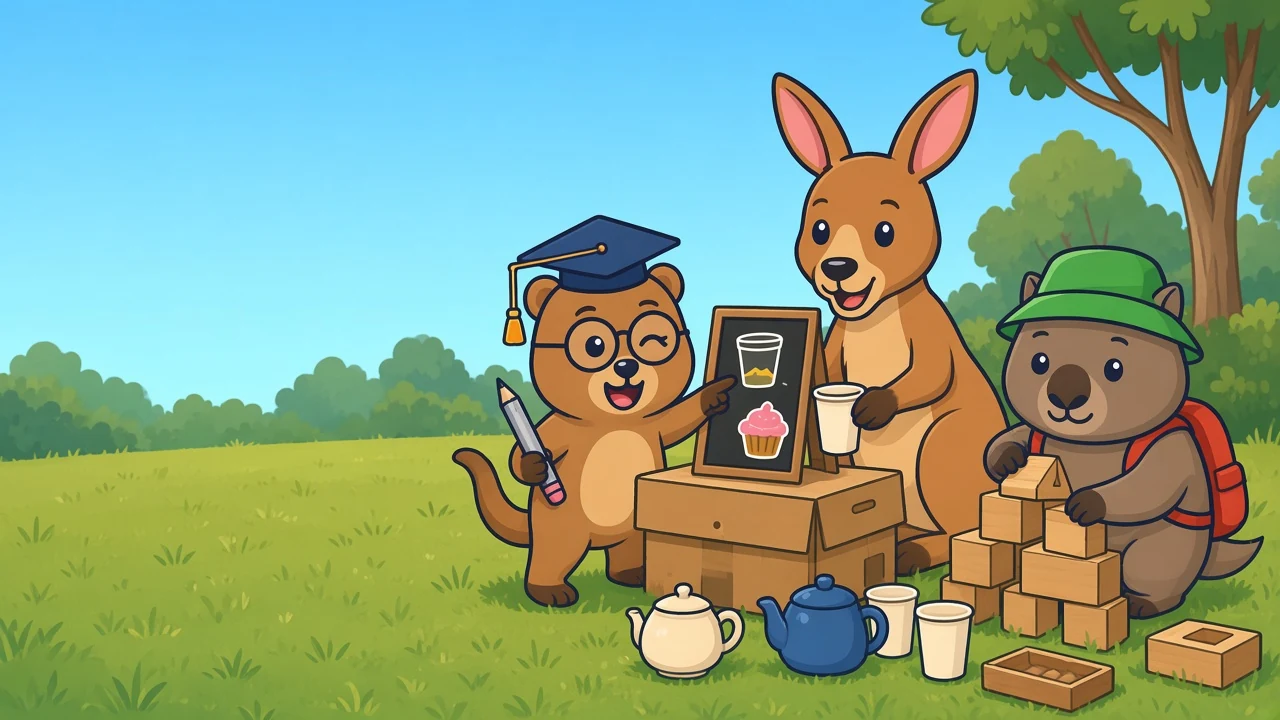
The practical result is a classroom where the teacher knows what needs to be covered, then builds play opportunities where those skills get used for a real purpose. Counting matters when you’re working out how many cups you need for the café. Writing matters when the café needs a menu.
Why the early years look different from later primary
Play-based learning is most closely tied to the early years, and many Australian schools are carrying it into junior primary classrooms too. That tells you something useful: the balance shifts over time.
You can expect to see more play, more movement and more child-led exploration in the first few years of school, and more explicit teaching and independent desk work as your child moves up. A classroom that’s still mostly play in Year 4 is a different proposition from one that’s mostly play in the first year of school.
If you’re unsure what your child’s school or system expects at a particular year level, ask the teacher directly, or check the current Australian Curriculum and your state or territory education department’s guidance. These are updated from time to time, and the official documents are the accurate source.
What play supports in the classroom
The four areas most often linked to play-based learning are easy to spot once you know what you’re looking for.
Social and emotional: negotiating roles, sharing materials, and managing frustration when a game doesn’t go your way.
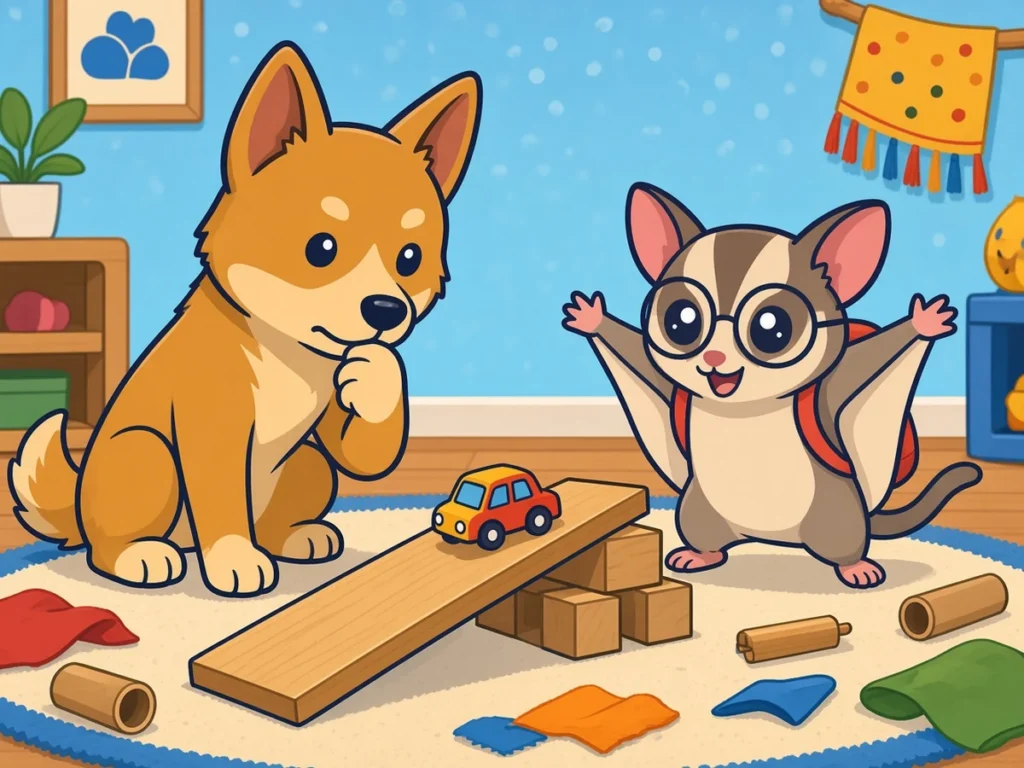
Thinking and problem solving: testing an idea, solving a problem, and working out why the ramp keeps tipping the car off.
Physical: climbing, balancing, lifting, and the fine hand control that comes with blocks, tools and craft.
Language: explaining a plan, telling a story, and making a case for who gets to hold the clipboard.
Child-directed play and intentional teaching
Play-based learning is about letting children explore, create, experiment and lead their own learning. Sitting alongside that is intentional teaching, the deliberate side of the equation: the educator decides what to set up, what to notice, what to say and when to step in.
That combination is why a good play-based room feels relaxed but not random. The adult has a reason for the water trough being out today and not last week, and a reason for crouching down beside one child rather than another.
What play-based learning is not
It isn’t chaos with a label. Intentional teaching and deliberate planning sit inside it.
It isn’t an absence of explicit teaching. Teachers still explain, demonstrate and correct.
It isn’t the same as free play with no adult involvement, though free play has its own value.
It isn’t only for preschool. It’s strongest in the early years and often carries on into junior primary.
It doesn’t mean your child never practises basic skills. Practice and play aren’t enemies.
How to support it at home without turning home into school
You don’t need a laminated lesson plan. Most of what helps is cheap, ordinary and already in your house.
Follow your child’s lead for ten minutes. Let them choose the game and the rules, and resist the urge to improve it.
Keep materials open-ended. Boxes, blocks, sand, water, fabric, pegs and cardboard outlast most single-purpose toys.
Ask questions without one right answer. What will happen if you move that piece? How else could you do it?
Let boredom happen. The first five minutes of nothing are usually followed by an idea.
Bring play into real life.Cooking, measuring and kitchen experiments, setting the table, sorting the washing and writing a shopping list all carry maths and literacy without a worksheet.
Tell the teacher what your child is into at home. A passion for dinosaurs or diggers is useful information in a classroom.
Read aloud, often. It’s the least glamorous and most reliable thing on this list.
Where structured practice fits
Play and structured practice do different jobs, and most children need some of both. Play builds the reasons to use a skill. Practice builds the fluency that makes using it easy. And a little practice most days tends to work better than a big session once a week.
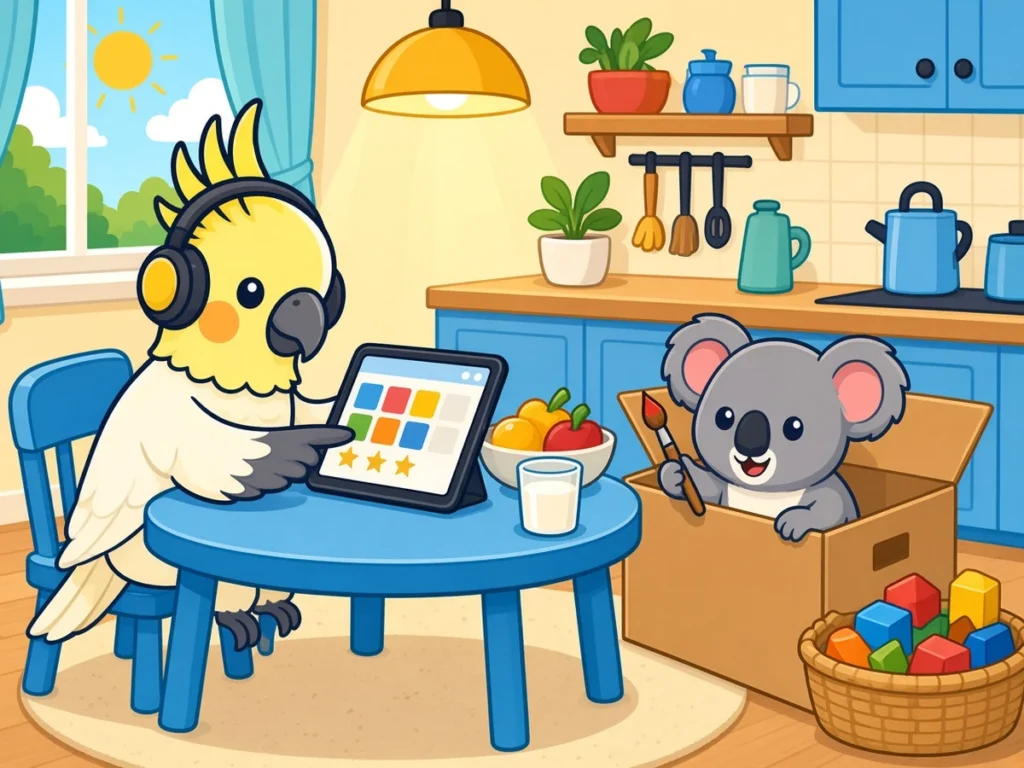
That’s where something like QuoKid sits. It’s short daily practice for children aged 5 to 11, in maths, science, phonics, and spelling and grammar. A fresh set of activities is waiting each morning, matched to your child’s age and the topics you’ve switched on. On the Family plan, the questions are written around each child’s own results, and the level eases off or steps up as the week goes. Correct answers earn stars, and grown-ups can turn stars or a streak into a real reward at home, like an extra bedtime story or picking Friday’s movie.
It’s structured practice, not a replacement for a cardboard box and an afternoon. A few minutes on QuoKid, then off to the cubby, is a pretty good balance.
How much of the day is child-directed, and how much is teacher-directed?
What learning are you noticing in my child’s play at the moment?
How do you record what children learn during play?
What can I do at home that would help?
Does the balance of play and explicit teaching change later in the year?
FAQ
Is play-based learning the same as free play?
No. In free play, children choose and run the play themselves. Play-based learning is a teaching approach where children build skills, knowledge and understanding through play, with an educator planning the environment and acting as a facilitator. Free play can happen inside a play-based classroom, but the teacher’s planning and observation are what make it a learning approach.
Will my child still learn to read and write in a play-based classroom?
Yes. Play-based learning is a way of teaching, not a substitute for teaching content. Teachers plan learning experiences with the curriculum in mind and use intentional teaching to introduce and reinforce skills, including early reading and writing. If you want specifics about how literacy is taught in your child’s class, ask the teacher to walk you through a typical week.
Does play-based learning stop after the early years?
The emphasis usually shifts. Play is most prominent in the first few years of school, and as children move through primary school you can generally expect more explicit teaching and more independent work, with less of the day given over to play.
How can I tell whether the play at school is purposeful?
Look for a teacher who can tell you what a group of children was working on and why, and who can point to the materials, questions and prompts they provided. Purposeful play usually comes with observation and record keeping. If you can’t get a clear answer about what the play is building, ask again, in writing if that’s easier.
Is an educational app a reasonable substitute for play?
No, and a good one shouldn’t claim to be. Play builds the reasons to use a skill and gives children practice at negotiating, planning and persisting. Structured practice builds fluency. Most families end up using both, with play taking the larger share and screen-based practice kept short and purposeful, agreed in advance rather than drifting into open-ended screen time.
Practise this with quokid
Daily activities matched to your child's level. Free for one child.