
Math
·
6 min read
How to teach carrying and borrowing without tears
Column sums are the first time a sum can’t be done in one go. A few small habits make them far less scary.
Read articleScience
 The quokid team
7 min read
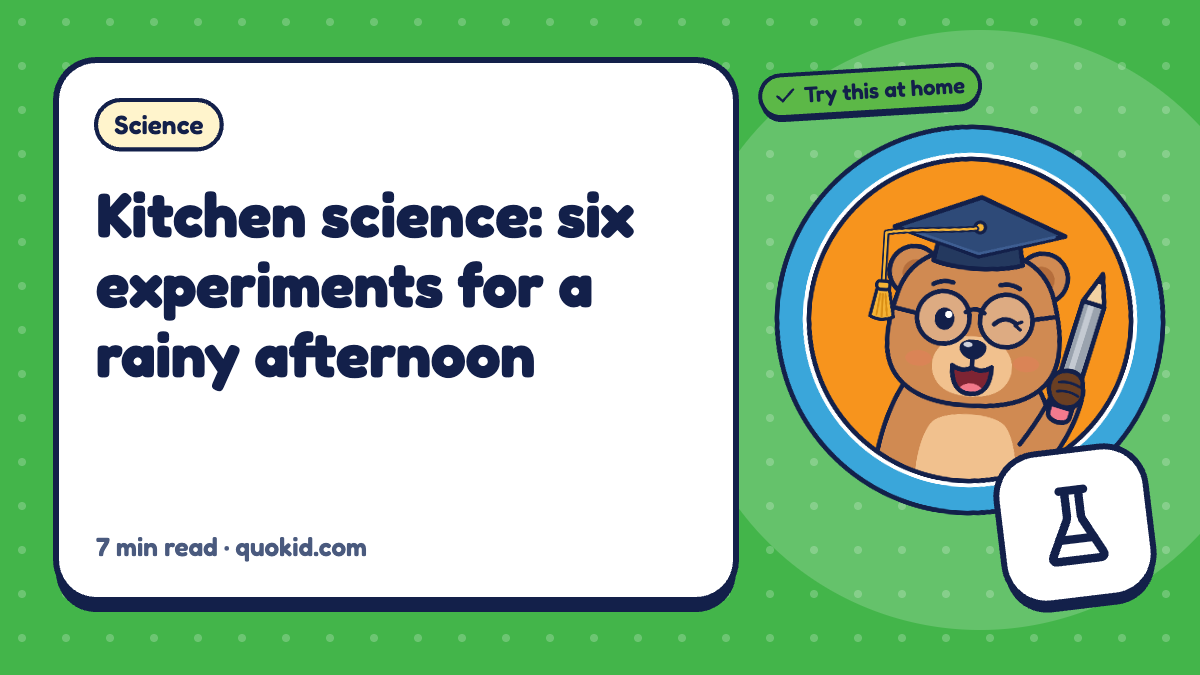
Science at this age is about noticing and asking why. These experiments use ordinary kitchen things and each takes less than half an hour.
Fill a bowl with water and guess which objects will float: an apple, a coin, a grape, a cork. Write the guesses down first, then test them.
Put ice cubes on plates in different places around the house. Which melts first? Talk about warm and cold, and why.
Wrap a damp paper towel inside a jar and tuck a dried bean between the towel and the glass. In a few days you can watch roots and a shoot appear.
Stand a glass of water on a sunny windowsill with white paper below it. Move the paper until a little rainbow appears.
Wrap a cold drink in foil, a sock and kitchen paper. Which keeps it coldest? It is a first fair test, and a great conversation about materials.
Daily activities matched to your child's level. Free for one child.
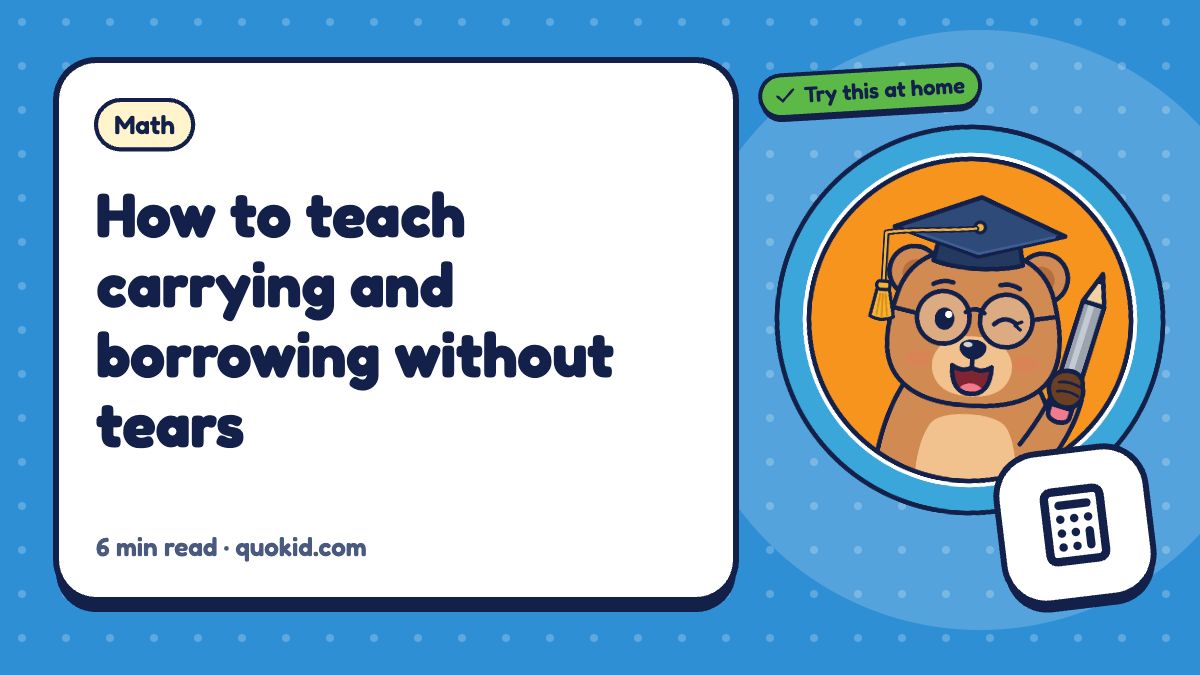
Column sums are the first time a sum can’t be done in one go. A few small habits make them far less scary.
Read article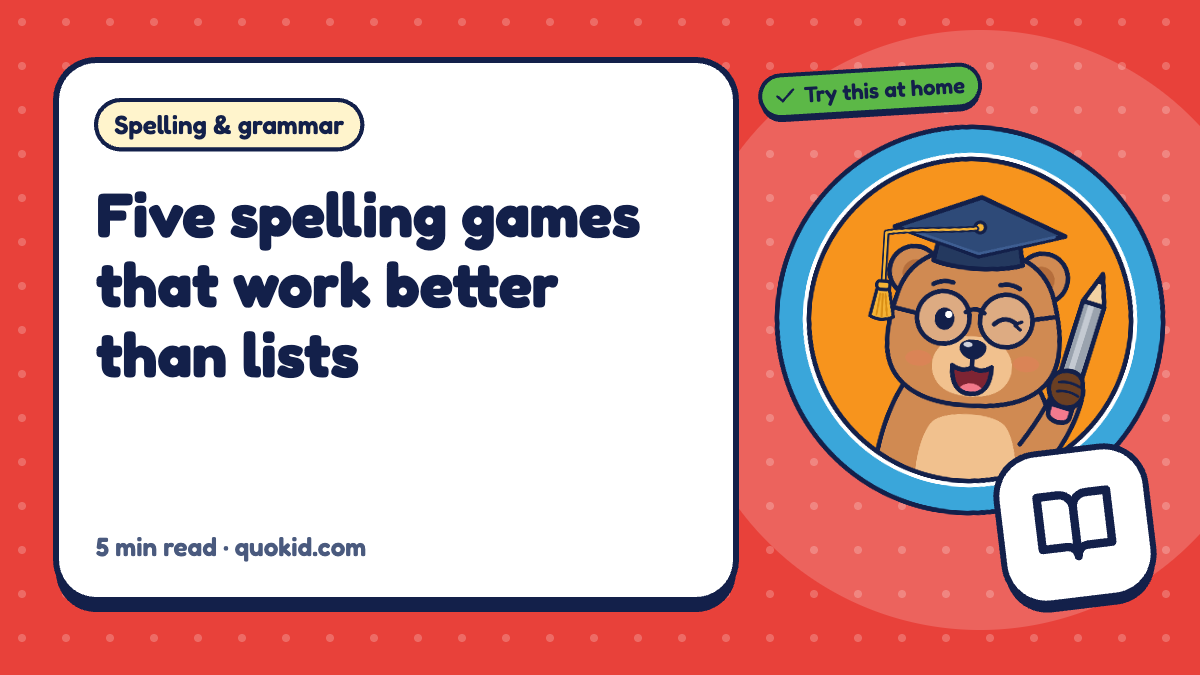
Copying a word ten times rarely sticks. These quick games get children hearing, saying and building words instead.
Read article
Short, regular practice is easier to fit in, easier to stick with and better for memory.
Read articleEmbeds stay paused until you choose.
Required for the site to function. Always enabled.
Helps us understand how visitors use the site.
Used for advertising and remarketing.