Play-based learning vs adaptive digital practice: which suits your child?
The quokid team
·
·
8 min read
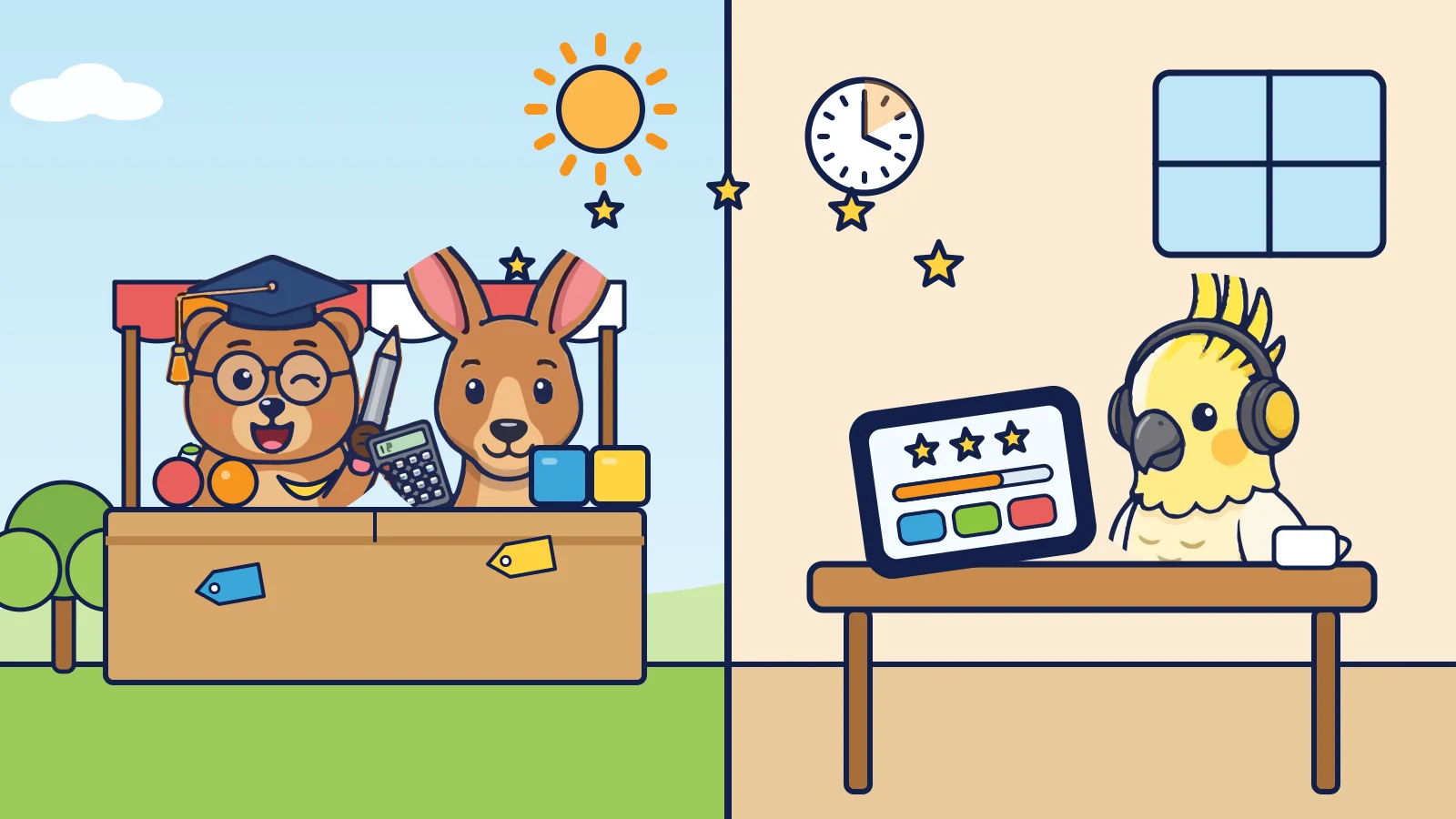
Two very different pictures of learning turn up in Australian homes most weeks. In one, a five-year-old is deep inside a shop made of cardboard boxes, negotiating who gets to be the customer. In the other, a seven-year-old is answering a short set of questions on a tablet that get a little harder when they’re going well. Both are real learning. The more useful question isn’t which one wins. It’s which one your child needs more of this term.
Play-based learning is an approach where children build skills, knowledge and understanding through play. It usually starts with the child’s interest, and the adult shapes the environment, the materials and the gentle nudges around it.
That doesn’t mean adults stand back and watch. Australia’s Early Years Learning Framework (EYLF V2.0) pairs play-based learning with intentionality. The Australian Education Research Organisation’s play-based learning and intentionality resources describe a balance: play is child-led and driven by children’s own ideas and interests, while educators guide it thoughtfully to extend each child’s learning.
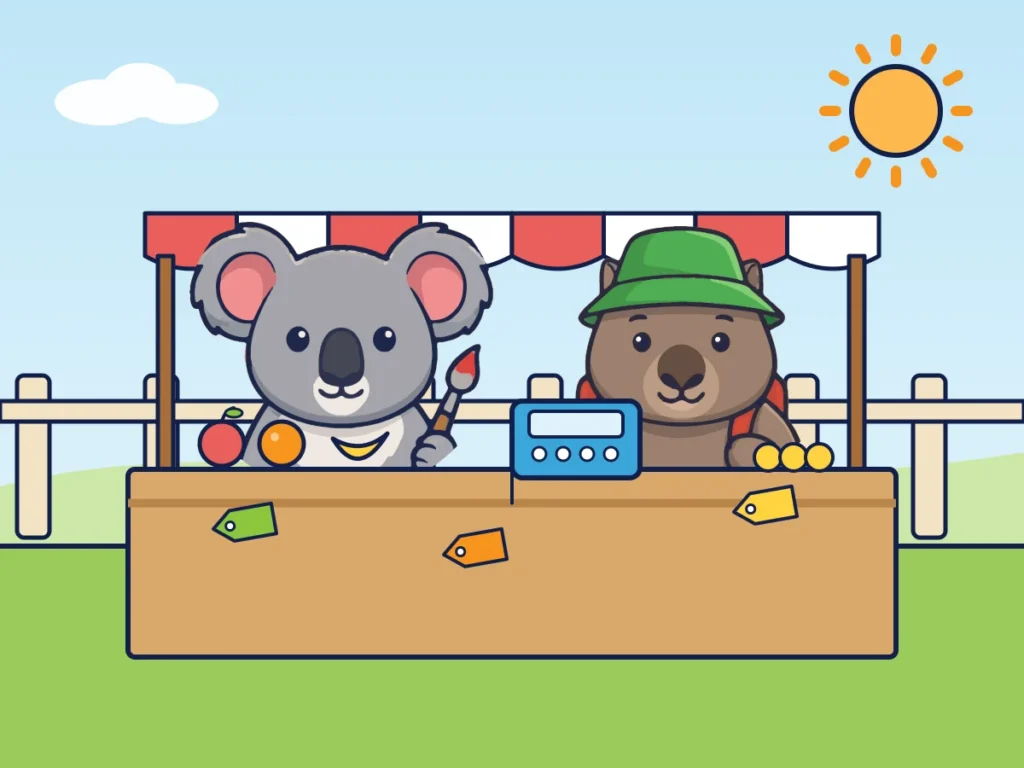
One good game can carry a lot at once. A game of shops can involve counting, letter sounds, turn-taking and the fine motor work of writing a price tag. ACECQA’s information sheet on the EYLF practice describes children in play making plans, creating characters, solving problems and learning how to socialise, negotiate and think with others.
For school-age children the picture shifts. In outside school hours care, the national framework My Time, Our Place describes educators as deliberate, purposeful and intentional in children’s play and leisure, so play still has an adult paying attention. In the classroom, the Australian Curriculum sets out what students learn rather than prescribing one teaching method, but ACARA’s descriptions of the first year of school are full of play and exploration.
What adaptive digital practice does differently
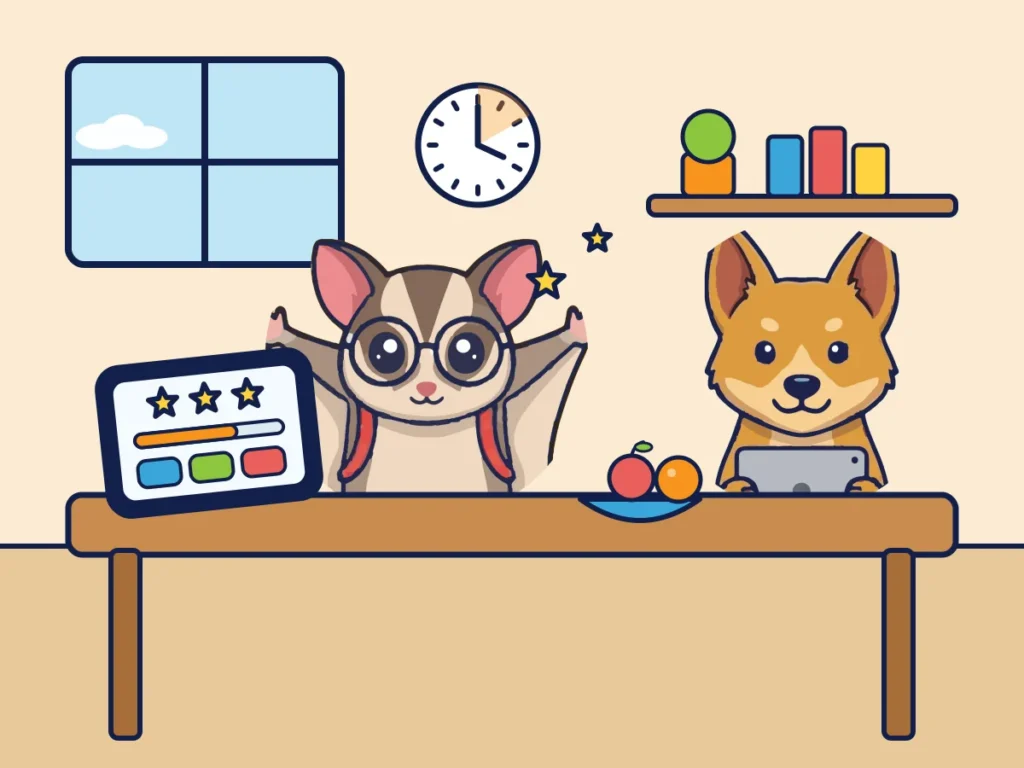
Adaptive digital practice is short, structured question-and-answer work where the difficulty responds to how the child is going. The child answers, finds out straight away whether they were right, and the next lot of work is pitched from those results rather than from a fixed worksheet.
In QuoKid, children aged 5 to 11 practise maths, science, phonics, and spelling and grammar, with times tables in the mix. A fresh set of activities is ready each morning for their age and the topics a grown-up switches on. On the Family plan, each child’s questions are written around their own results. If they’re fast and accurate, the rest of the day’s questions can step up. Three strong days raise the next day’s level, and two shaky days ease it back so there’s room to practise.
The feedback loop is the point. A correct answer earns stars, a wrong one shows the right answer, and a grown-up can see in plain language what’s sticking and what’s still tricky. Grown-ups write the rewards, like an extra bedtime story, picking tonight’s dinner or a park visit, and stars or a streak count towards them.
That reward layer is where adaptive practice and play start to overlap. The practice itself isn’t play-based in any meaningful sense. It’s deliberate repetition at the right level. What surrounds it, the agreed reward and the Saturday outing, is where a lot of the fun sits.
A side-by-side look
What you’re comparing
Play-based learning
Adaptive digital practice
Who leads
The child’s interest, with an adult extending it
The program, with the child answering
Skills usually built
Talking, creativity, problem-solving and getting along, often several at once
Accuracy and fluency in a specific subject, such as phonics or maths
How feedback arrives
Through the play itself and the adult’s comments and questions
Straight away, question by question, plus a progress view for grown-ups
Best moment in the day
Any open stretch, especially when energy is high
Short, predictable blocks, like before school or before dinner
The parent’s job
Set up materials, ask questions, resist taking over
Choose topics, agree the rewards, check progress
What to watch for
Play that looks busy but never gets extended
Practice that becomes a lonely screen habit
When play-based learning is the better fit
Play earns its place when the gap isn’t knowledge but confidence, language or social skill. A child who shuts down at the sight of a worksheet rarely opens up because the worksheet got easier. They often open up because a game gave them a reason to care.
Your child is in the early years and still building language, turn-taking and managing big feelings.
They can explain an idea in play but freeze when asked to write it down.
They’re new to school, or coming back after a break, and need to find their feet first.
You want them to practise solving problems with no obvious right answer.
They’re tired and need something that restores them rather than tests them.
When adaptive digital practice earns its place
Adaptive practice suits the opposite problem. The child understands the idea but needs repetitions to make it stick, and those repetitions have to be pitched well. Too easy and they coast. Too hard and they decide they’re “bad at maths”. Work that adjusts to recent results handles that pitch better than a printed page can.
They respond well to visible progress, like a star count or a streak.
You want a shared reward to work towards together rather than a prize handed over.
Running both without doubling the load
The two approaches aren’t competing for the same hours. They do different jobs, and a simple weekly rhythm keeps both going without turning your kitchen into a classroom.
Protect one long, unstructured play block each weekend. No agenda, no worksheet waiting at the end of it.
Use short practice sessions on ordinary weekdays, around ten minutes, in one or two subjects rather than all four.
Check progress once a week instead of nightly, and choose the next topics from what it shows.
Agree the rewards in advance so the stars mean something at home, and lean towards rewards you do together rather than things you buy.
If you’d like to test the digital half, QuoKid’s Free plan covers one child. The Family plan covers up to five children for US$4.99 a month or US$49.99 a year, which works out at about US$4.17 a month, with a 7-day trial. There are no ads, no chat and no public leaderboards. Treat the trial as a test of your routine, not just the app. You can try it in your browser at learn.quokid.com.
Signs the mix needs adjusting
No split stays right forever. Watch for these signals and change one thing at a time.
Practice sessions are stretching past the point of usefulness and ending in tears.
Play has become screen time by another name, with no grown-up nearby.
Your child can answer questions but can’t explain their thinking out loud.
Rewards have stopped motivating and the stars are being ignored.
You’re the one pushing, every single time.
FAQ
Is play-based learning part of the Australian Curriculum?
Not as a required method. The Australian Curriculum sets out what students should learn and the standards to aim for, and states, territories, school sectors and schools decide how it’s taught. Play-based learning sits at the heart of the Early Years Learning Framework, which covers birth to five and the transition to school, and ACARA’s descriptions of the Foundation year talk about students who experiment, practise and play. Our guide to play-based learning and the Australian Curriculum goes into more detail.
Does adaptive digital practice replace hands-on play?
No, and it shouldn’t be asked to. Adaptive practice is structured repetition at the right level, which is useful for consolidating phonics, maths, science and spelling. Play builds talking, creativity, problem-solving and getting along with others, which a question-and-answer format doesn’t do well. Most families get further by running both in small, consistent amounts.
How much time should a 5 to 11 year old spend on each?
There’s no single number that fits every child. A practical approach is to protect generous unstructured play time and keep digital practice to short, focused blocks of around ten minutes, then adjust based on how your child finishes each session. If either ends in tears or boredom, the length is a sensible first thing to change.
What if my child prefers the app to the blocks?
Preference on its own isn’t a problem, but a narrow diet is. If the tablet is the only thing your child reaches for, keep practice sessions short and tie them to a reward that gets the family moving, like a park visit. Then watch whether play comes back once the screen isn’t the easiest option in the room.
Can play-based learning happen at home without a teacher?
Yes. The grown-up’s job is to set up materials, ask open questions and extend an idea rather than direct it. A cardboard shop with price tags, a paper menu for a pretend cafe or a nature collection sorted by colour can all carry several kinds of learning at once. Paying attention is the key ingredient, not formal training or special equipment.
Practise this with quokid
Daily activities matched to your child's level. Free for one child.